
"Sermonear" rara vez tiene que ver con el tono. Es un síntoma de un problema de visibilidad: una persona sostiene todos los detalles — la cita al dentista, la fecha de vencimiento de la factura de la luz, el paquete que llega el martes, la cena con amigos el sábado — y tiene que seguir retransmitiéndolos porque la otra persona genuinamente no los tiene. Cada recordatorio se siente como un pinchazo porque es el único canal que tiene la información. La solución no es acordarse de sermonear menos o ser más suave al respecto. Es hacer que la información subyacente sea visible para ambos en el mismo lugar, así estáis leyendo de una página compartida en vez de que una persona la narre en voz alta. Cuando tu pareja puede ver por su cuenta lo que viene, los recordatorios se vuelven opcionales en vez de esenciales — y toda la dinámica se suaviza.
Por qué "solo recuérdamelo" lo empeora silenciosamente
Cuando eres quien lo recuerda todo, "solo recuérdamelo" suena como ayuda. En la práctica te cimenta como la única fuente de verdad: el plan vive en tu cabeza, y tu pareja depende de que lo liberes a tiempo. Eso es más carga mental, no menos — ahora estás rastreando la cosa Y rastreando cuándo mencionarla, y leyendo la reacción de tu pareja a cómo la mencionaste.
El objetivo más saludable es sacar la información de tu cabeza y ponerla en un lugar que ambos podáis consultar. Un calendario compartido, una factura compartida, un itinerario de viaje compartido — cualquier cosa que uno de vosotros pueda mirar sin preguntar al otro. Una vez que los detalles son visibles, un recordatorio es solo una cortesía, no la única forma en que viaja la información. Ese cambio es lo que de verdad termina el ciclo de sermonear.
- Sermonear normalmente es falta de visibilidad compartida, no un problema de estilo de comunicación
- "Recuérdamelo" mantiene a una persona como el único punto de fallo
- La información compartida y visible de un vistazo convierte los recordatorios en cortesías opcionales
Pon primero lo recurrente en raíles compartidos
Empieza con las categorías que causan más retransmisión repetida: citas y eventos, facturas y fechas de vencimiento, entregas, y viajes. Estas son las cosas que te encuentras diciendo dos veces. Mételas en una superficie compartida una vez y dejas de narrarlas.
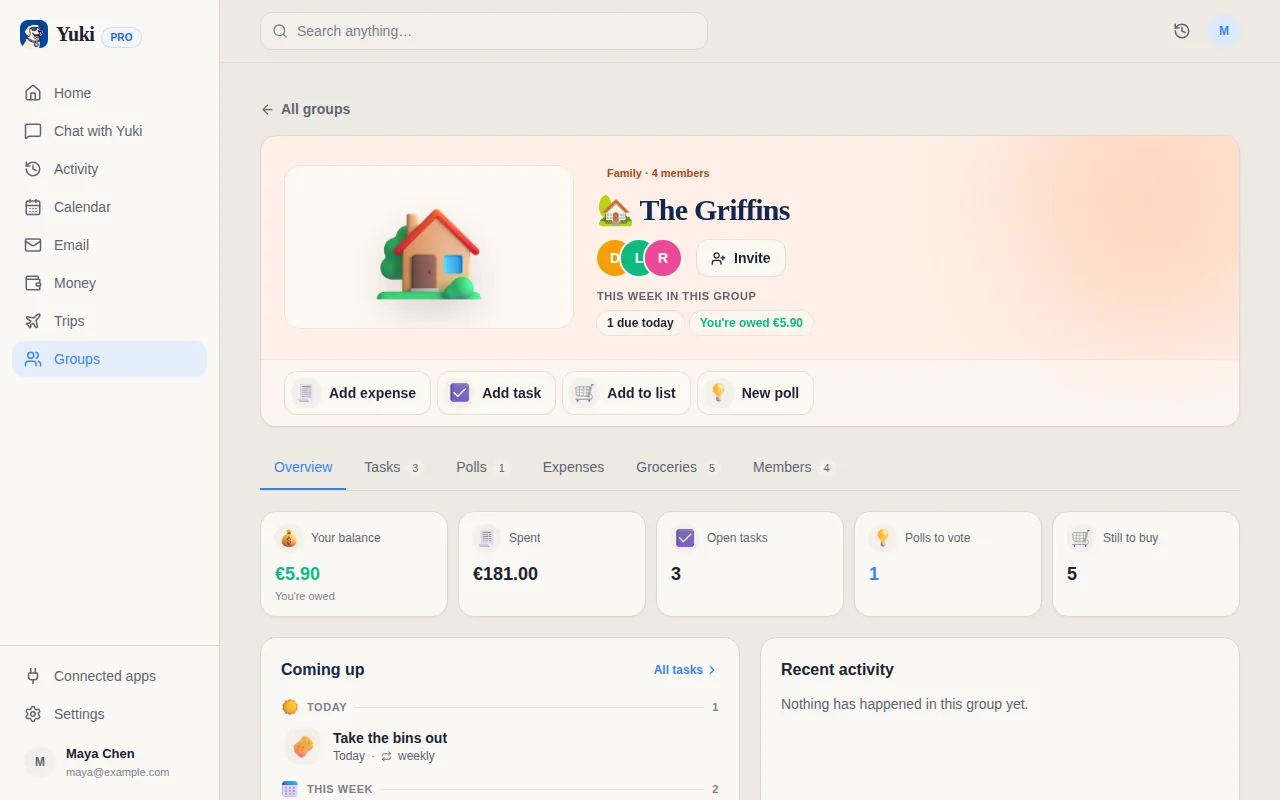
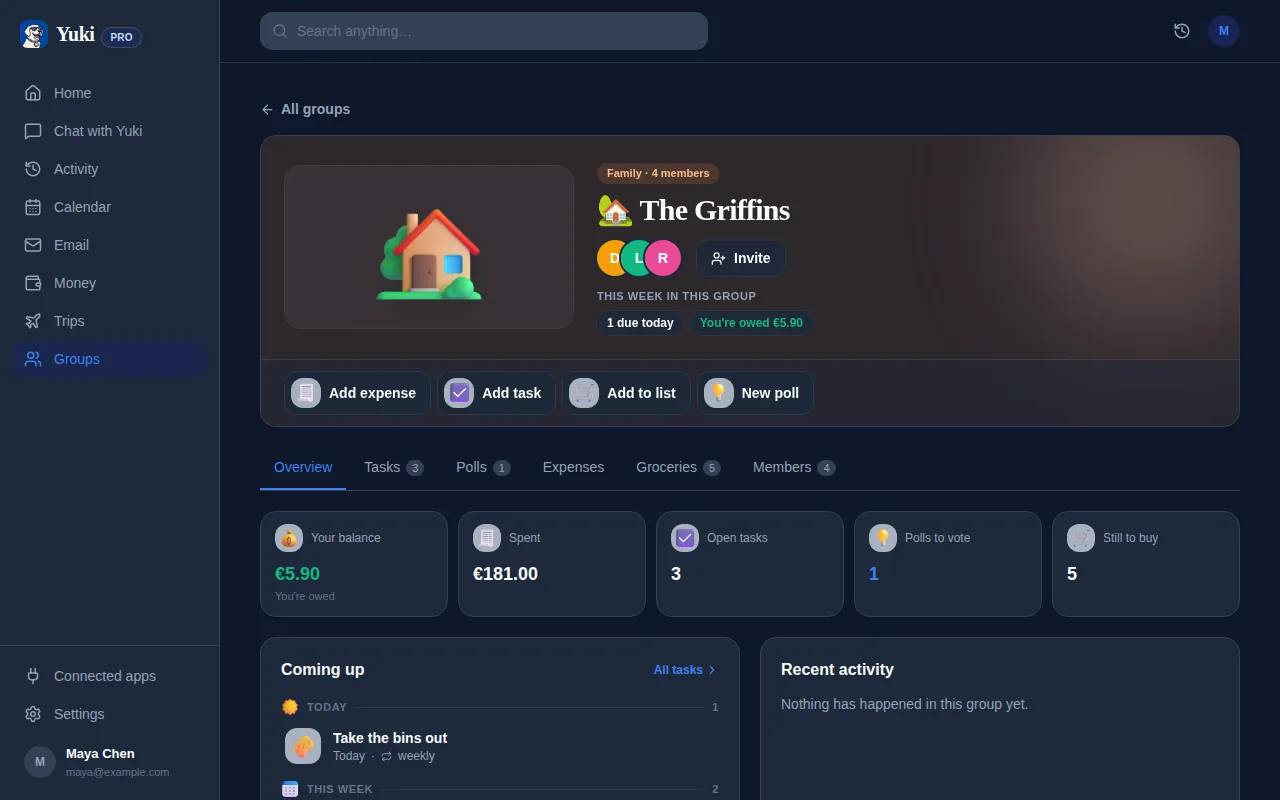
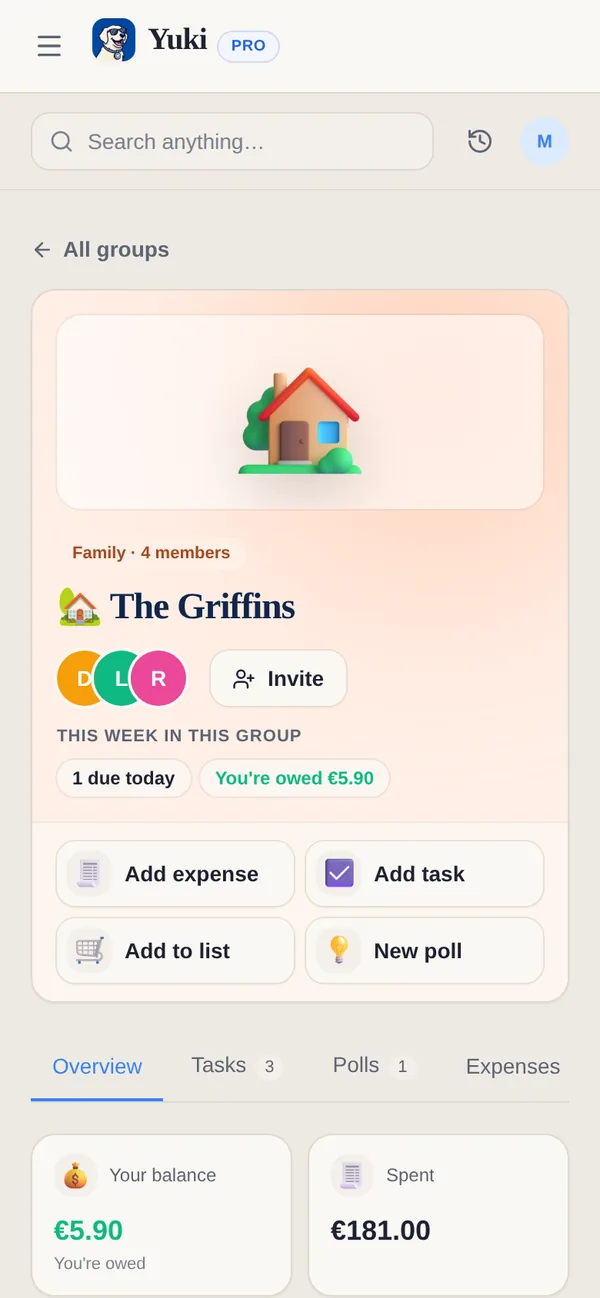
Este es exactamente el trabajo de carga mental que Yuki está construido para eliminar. Lee las confirmaciones, recibos, facturas e invitaciones que ya hay en tu Gmail y las convierte en un calendario vivo, gastos y suscripciones controlados, seguimiento de entregas e itinerarios de viaje — sin entrada manual de datos. Ponlos en un grupo compartido para vosotros dos y los detalles se rellenan automáticamente para ambas parejas a medida que llegan los correos, en vez de que uno de vosotros los reenvíe, capture en pantalla o repita.
- Prioriza a los cuatro reincidentes: eventos, facturas, entregas, viajes
- Yuki los construye desde tu bandeja de entrada automáticamente — sin retecleardr
- Los grupos compartidos significan que las confirmaciones nuevas aparecen para ambos a la vez
Deja que el calendario sea el mensajero
La mayoría de las conversaciones de "¿te acordaste de que tenemos…" desaparecen cuando ambas personas miran el mismo calendario. Cuando una reserva de cena o la cita de un niño aterriza en una bandeja de entrada, debería convertirse en un evento de calendario que ambos podéis ver — sin que nadie lo reintroduzca.
Yuki escribe de forma bidireccional en Google Calendar (la escritura en Apple Calendar es solo para iOS), así que los eventos extraídos del correo aparecen en el calendario que ya consultáis, y los cambios se sincronizan de vuelta. Tu pareja no necesita abrir una app nueva ni esperar a que se lo transmitas — el plan simplemente está ahí. Esa es la diferencia entre "te conté lo del sábado" y "está en el calendario que ambos usamos".
Comparte visibilidad de dinero, no hojas de cálculo
Las facturas y suscripciones son un desencadenante clásico de sermoneo porque son invisibles hasta que son urgentes. Si solo una pareja ve la fecha de vencimiento, la otra experimenta cada recordatorio como presión. Hacer los números visibles para ambos elimina esto por completo.
Yuki controla facturas, gastos y suscripciones recurrentes extraídos directamente de tus recibos y extractos por correo, y los grupos compartidos incluyen división de facturas y liquidación para que parejas, compañeros de piso o coparentalidad puedan ver quién debe qué sin un hilo de mensajes en curso. El objetivo no es auditarse mutuamente — es que cuando ambas personas pueden ver qué vence y qué se ha pagado, nadie tiene que ser el vigilante.
Reserva los recordatorios reales para los pocos que importan
Una vez que el calendario, las facturas, las entregas y los viajes son compartidos, descubrirás que la mayoría de la retransmisión diaria simplemente se detiene — la información ya está donde tu pareja puede verla. Lo que queda es un pequeño conjunto de avisos genuinamente sensibles al tiempo, y esos aterrizan de forma completamente distinta cuando son la excepción en vez del goteo constante.
Las notificaciones inteligentes y los resúmenes diarios de Yuki pueden sacar a la luz lo que viene para ambos — los eventos del día, facturas próximas, paquetes que llegan — así que la app hace el aviso suave en vez de ti. Cuando un resumen diario neutral dice "factura de la luz vence el jueves", no lleva la misma carga que una pareja diciéndolo por tercera vez. Ese es todo el truco: deja que el sistema sostenga los recordatorios para que vuestra relación no tenga que hacerlo.
Paso a paso
- 1Lista las cosas que te encuentras diciendo dos veces — citas, facturas, entregas, próximos viajes, planes sociales.
- 2Ambas parejas instaláis Yuki (gratis, iOS y Android) y conectáis Gmail para que confirmaciones, recibos e invitaciones se conviertan en eventos de calendario, gastos e itinerarios automáticamente.
- 3Cread un grupo compartido para los dos para que esos detalles se rellenen para ambas parejas a medida que llegan correos nuevos.
- 4Conectad Google Calendar para que los eventos fluyan al calendario que ya consultáis ambos (la escritura en Apple Calendar es solo para iOS).
- 5Activad división de facturas y liquidación compartidas para que las fechas de vencimiento y saldos sean visibles para ambos, no en manos de una sola persona.
- 6Activad resúmenes diarios y notificaciones inteligentes para que la app saque a la luz lo que viene — dejando que ella haga el aviso en vez de ti.
- 7Acordad consultar la vista compartida antes de preguntar, y reservad los recordatorios hablados para los pocos genuinamente sensibles al tiempo.