
La charge mentale est le travail invisible de se souvenir, d’anticiper et de coordonner tout ce dont un foyer a besoin pour fonctionner — le rendez-vous chez le dentiste que personne n’a noté, le renouvellement sur le point de se prélever automatiquement, le fait que vous n’avez plus de croquettes pour le chien et que c’est l’anniversaire de quelqu’un jeudi. Ça n’apparaît presque jamais sur une liste de tâches parce que ça ne quitte jamais votre tête, et c’est exactement pour ça que c’est épuisant. Le but de ce guide n’est pas de vous aider à la porter plus efficacement. C’est de vous aider à arrêter d’en porter autant dans votre tête — en externalisant ce que vous suivez, en le rendant visible aux personnes avec qui vous partagez votre vie, et en laissant la capture de routine se faire automatiquement plutôt que de compter sur vous pour la remarquer.
Comprenez ce qu’est vraiment la charge mentale
La charge mentale est différente des tâches ménagères. Les tâches sont visibles et finies — vous faites la vaisselle, c’est fait. La charge mentale est le travail cognitif continu de gérer le foyer : remarquer que quelque chose doit être fait, s’en souvenir au bon moment, décider qui le fait, et suivre. C’est la différence entre cuisiner le dîner et être la personne qui sait toujours ce qu’il y a dans le frigo, ce que tout le monde va manger, et quand vous allez manquer de lait.
La raison pour laquelle elle épuise les gens de façon disproportionnée, c’est qu’elle est continue et largement invisible. Elle ne s’arrête pas quand vous vous asseyez, et personne ne vous remercie parce que personne ne l’a jamais vue. Dans la plupart des foyers, une personne devient la « gardienne de tout » par défaut — et le cerveau de cette personne fait discrètement tourner une opération logistique à temps plein en plus d’un vrai travail et d’une vraie vie.
- Anticipation — remarquer les besoins avant qu’ils ne deviennent des urgences
- Mémoire — garder dates, renouvellements et détails sans registre externe
- Décision — qui fait quoi, et quand
- Surveillance — vérifier que ça a vraiment été fait
Sortez-la de votre tête et mettez-la dans un système
Le geste le plus efficace, c’est d’arrêter d’utiliser votre cerveau comme dispositif de stockage. Tout ce que vous « gardez en tête » est un processus en arrière-plan qui draine votre attention. Au moment où ça vit quelque part de fiable — un agenda, une liste, un rappel qui se déclenchera tout seul — votre cerveau reçoit la permission de le lâcher.
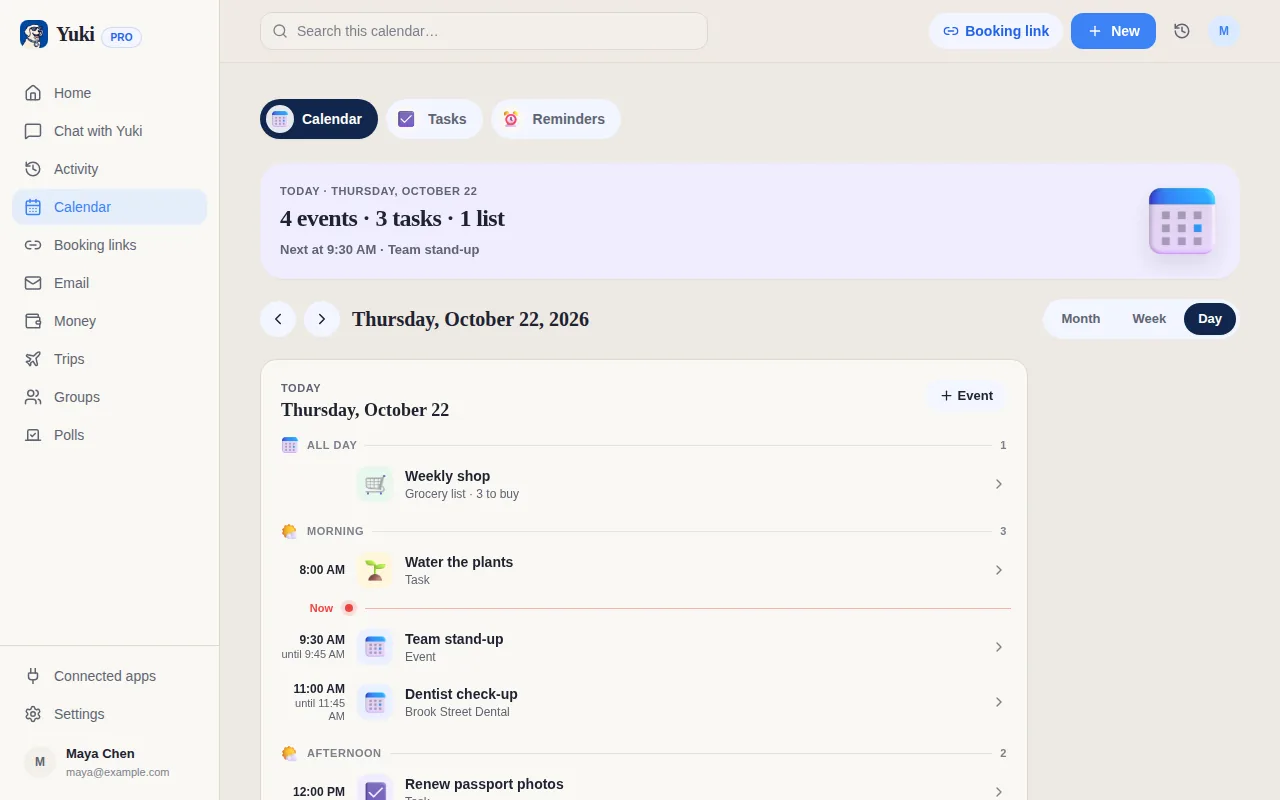
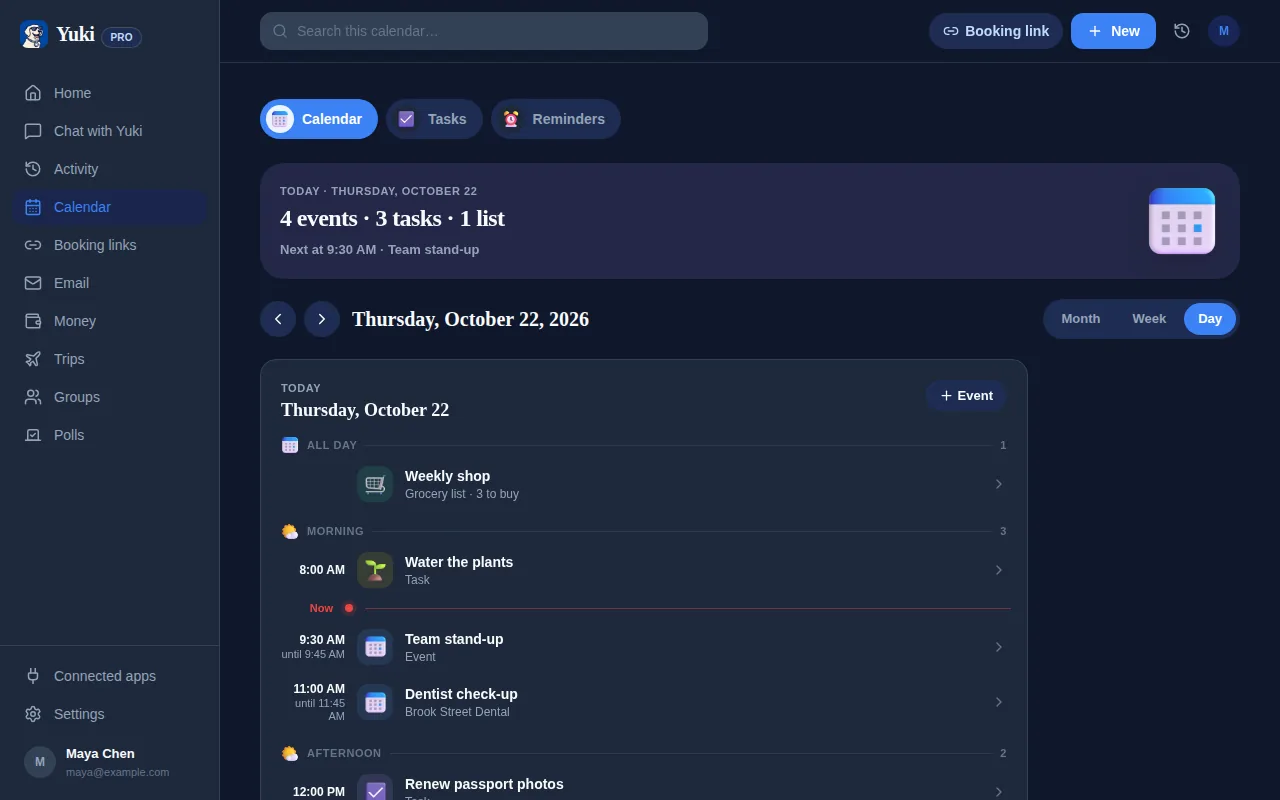
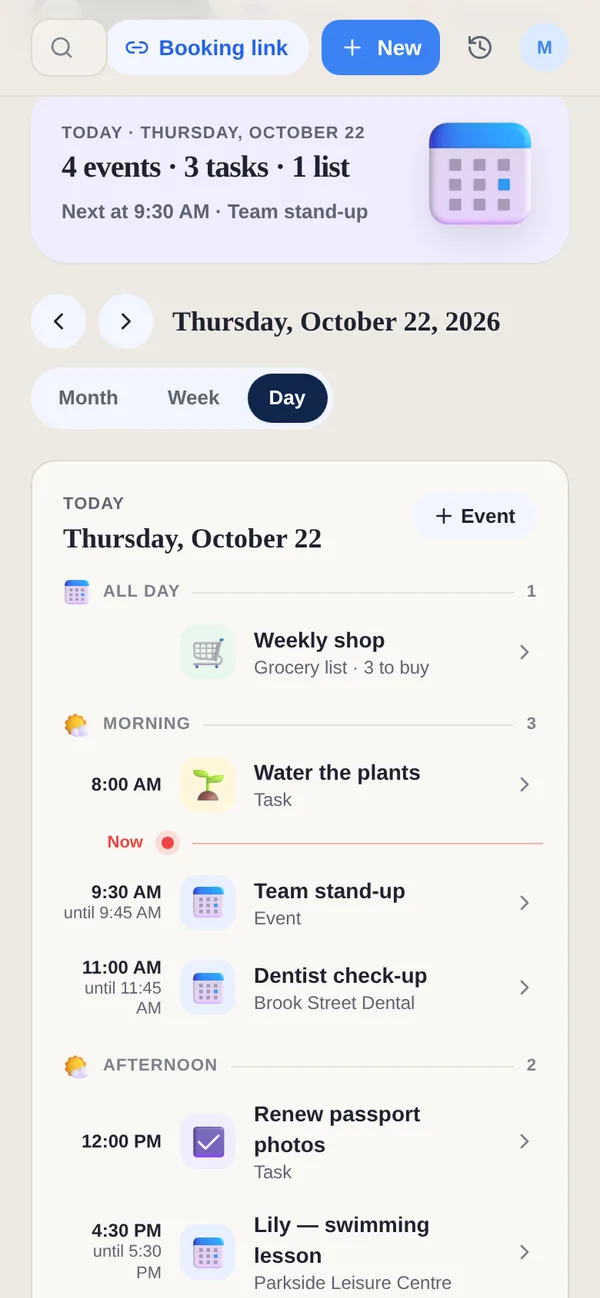
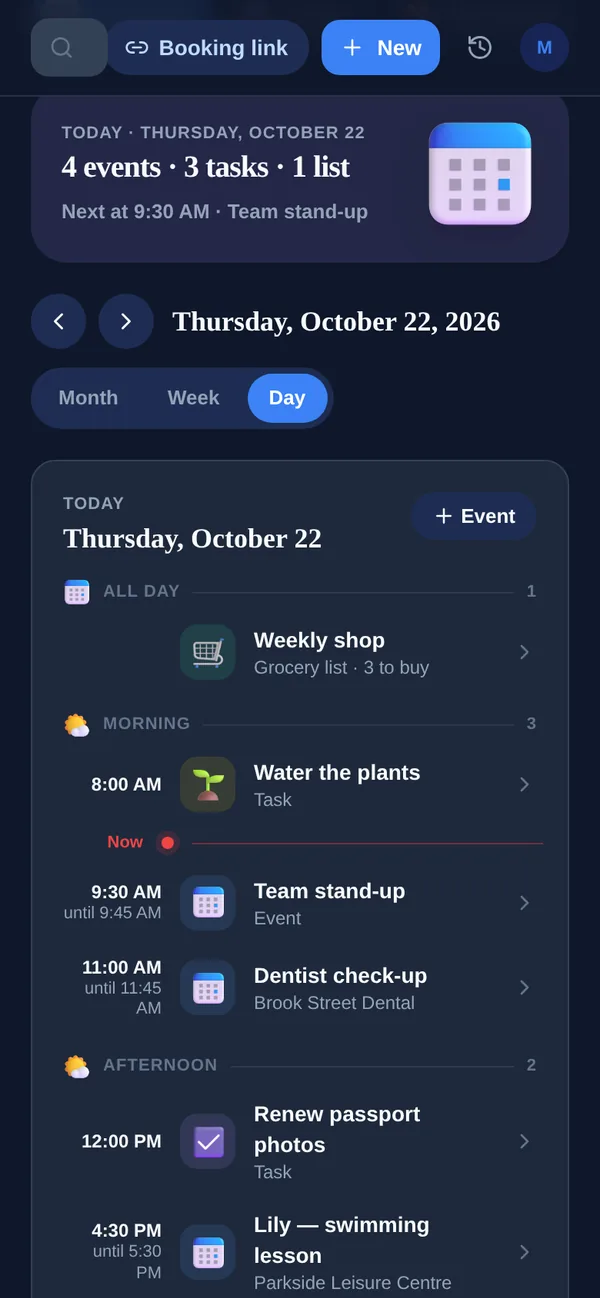
Commencez par un vidage de cerveau pour voir le vrai volume, puis donnez à chaque élément un foyer permanent : les choses datées vont sur un agenda, les choses d’argent sont suivies comme factures ou abonnements, les courses deviennent des tâches, et les dates récurrentes comme les anniversaires et renouvellements deviennent des rappels. Le mot-clé est fiable — un système auquel vous ne faites qu’à moitié confiance est pire que rien, parce que vous continuerez à le revérifier mentalement. C’est là qu’une couche de mémoire et de coordination pour le quotidien gagne sa place : au lieu que vous soyez la base de données, le système la retient, et se souvenir cesse d’être une responsabilité personnelle.
Automatisez la capture pour ne pas être le préposé à la saisie
Voici le piège dans lequel tombe la plupart des conseils d’organisation : ils déplacent juste la charge mentale vers une appli que vous devez maintenant nourrir manuellement. Si vous devez vous souvenir d’enregistrer chaque facture, de taper chaque rendez-vous, et d’ajouter chaque renouvellement, vous n’avez pas réduit la charge — vous avez ajouté un travail administratif.
Le vrai soulagement vient quand la capture se fait à la source. La plupart de ce que vous suivez arrive déjà dans votre boîte mail : confirmations de commande, réservations de vol et d’hôtel, factures de charges, avis de renouvellement d’abonnement, invitations à des fêtes, mises à jour de livraison. Yuki se connecte à Gmail et transforme ces e-mails en un agenda à jour (en écrivant de façon bidirectionnelle dans Google Calendar), des dépenses et abonnements suivis, des itinéraires de voyage, un suivi de colis, et des rappels — automatiquement, sans que vous ayez à retaper quoi que ce soit. Le point, c’est que le fait de remarquer et d’enregistrer que vous faisiez dans votre tête se produit désormais tout seul, donc rien ne passe entre les mailles juste parce que vous étiez occupé.
- Confirmations et invitations deviennent des événements d’agenda
- Factures et reçus deviennent des dépenses suivies et des abonnements signalés avant leur renouvellement automatique
- Les réservations deviennent des itinéraires de voyage complets
- Les e-mails d’expédition deviennent un suivi de livraison
Rendez-la partagée pour ne pas être le seul à savoir
La charge mentale se concentre parce que l’information se concentre. Si les rendez-vous, les besoins d’épicerie et les échéances de factures n’existent que dans la tête d’une seule personne, cette personne est en permanence de garde. La solution est de rendre la logistique du foyer visible à tous ceux qui la partagent.
Les groupes partagés permettent aux couples, familles, coparents et colocataires de voir le même agenda, les mêmes listes et les mêmes dépenses — et de partager les factures avec solde des comptes pour que l’argent ne devienne pas une autre chose qu’une personne avance et suit discrètement. Quand tout le monde peut voir ce qui arrive, « tu t’es souvenu de… » devient quelque chose que n’importe qui peut prendre en charge, et le responsable par défaut cesse d’être toujours la même personne surchargée. La visibilité est ce qui fait vraiment tenir la délégation.
Remplacez la vérification constante par un seul coup d’œil quotidien
Une part surprenante de la charge mentale est l’anxiété sourde de scanner — feuilleter mentalement votre boîte mail, votre agenda et une demi-douzaine d’applis pour vous assurer que rien ne brûle. Chaque vérification est petite, mais l’habitude de ne jamais complètement se déconnecter est ce qui vous use.
Regroupez tout ça en un seul récap quotidien : un coup d’œil chaque matin qui vous dit ce qui se passe aujourd’hui — événements, factures dues, livraisons qui arrivent, choses à préparer. Quand vous faites confiance à ce coup d’œil unique pour tout couvrir, vous pouvez arrêter la revérification compulsive. Cette confiance est le véritable livrable de tout système de foyer : pas plus de fonctionnalités, mais la capacité de vraiment lâcher prise entre deux vérifications.
Étape par étape
- 1Faites un vidage de cerveau : passez 15 minutes à noter chaque tâche ouverte que vous suivez actuellement — factures, rendez-vous, renouvellements, courses, qui a besoin de quoi — pour voir le vrai volume.
- 2Classez chaque élément dans un foyer : agenda (daté), facture ou abonnement récurrent (argent), tâche (une course), ou rappel (anniversaire/renouvellement). Tout ce qui a un foyer est quelque chose que votre cerveau peut arrêter de retenir.
- 3Automatisez la capture à la source — connectez votre e-mail pour que confirmations, reçus, factures et invitations deviennent des événements d’agenda, des dépenses et des rappels sans que vous les retapiez.
- 4Rendez-la partagée, pas solitaire — mettez la logistique du foyer quelque part que votre partenaire, votre famille ou vos colocataires peuvent voir et sur lequel agir, pour que « tu étais au courant pour X ? » cesse d’être une conversation.
- 5Configurez un seul point de contrôle quotidien — un récap chaque matin qui vous dit ce qui se passe aujourd’hui, au lieu de scanner mentalement cinq applis et votre boîte mail.
- 6Définissez des responsables par défaut pour les catégories récurrentes (courses, factures, logistique des enfants) pour que chaque élément ait une personne, pas un retour permanent vers vous.