
Most household imbalance isn't about who does the dishes — it's about who remembers the dishes need doing, notices you're out of soap, tracks the pediatrician appointment, and holds the running list of everything that has to happen this week. That remembering-and-coordinating work is the "mental load," and it's usually invisible, unspoken, and carried by one person. Splitting chores 50/50 doesn't fix it if one partner is still the manager assigning the tasks. The real goal is to make the logistics of your shared life visible to both of you, so that noticing, planning, and remembering become a shared system instead of one person's second job. This guide walks through how to do that concretely.
Name the invisible work first
Before you can split responsibilities fairly, you have to see all of them — and most couples only ever discuss the visible ones. Cooking, cleaning, and laundry get talked about because they're tangible. But the tasks that actually cause resentment are the ones no one names: knowing the dog is due for shots, noticing the gift needs buying before the party, tracking when the car registration expires, remembering which nights have soccer practice.
Sit down together and each write out everything you personally keep track of. Be specific and include the 'noticing' work, not just the 'doing' work. This exercise is often the first time one partner realizes how much cognitive overhead the other is carrying. The list itself is the intervention — you can't share a load you can't see.
- Include one-off-but-recurring tasks: renewals, appointments, gift-buying, restocking.
- Separate 'who does it' from 'who remembers it needs doing' — they're often the same person.
- Watch for 'manager' tasks: delegating, reminding, and following up are work too.
Divide by domain, not by chore
The most common mistake is splitting individual tasks while one partner stays the manager who assigns them. If you're the one saying 'can you book the dentist' and 'don't forget the electric bill,' you still own the mental load even if your partner does the physical task. That's delegation, not sharing.
Instead, hand over entire domains. One person owns groceries end to end — noticing what's low, building the list, planning meals, shopping. The other owns finances end to end — tracking bills, catching renewals, handling the budget. When someone owns a whole area, they carry both the thinking and the doing, and the other person can genuinely let it go. Rotate domains every few months if you want variety, but avoid splitting a single domain in half.
- Assign full ownership of an area, including the noticing and planning, not just execution.
- Aim to eliminate the 'household manager' role rather than share it.
- Pick domains that play to each person's strengths or preferences where you can.
Move it out of your heads and into one shared place
A fair division only holds if both partners can see the whole picture. When commitments live in one person's memory, that person stays the source of truth — and the single point of failure. The fix is a shared source both of you can check without asking each other: a shared calendar for appointments and events, a shared list for groceries and errands, and a shared view of bills and who's paying what.
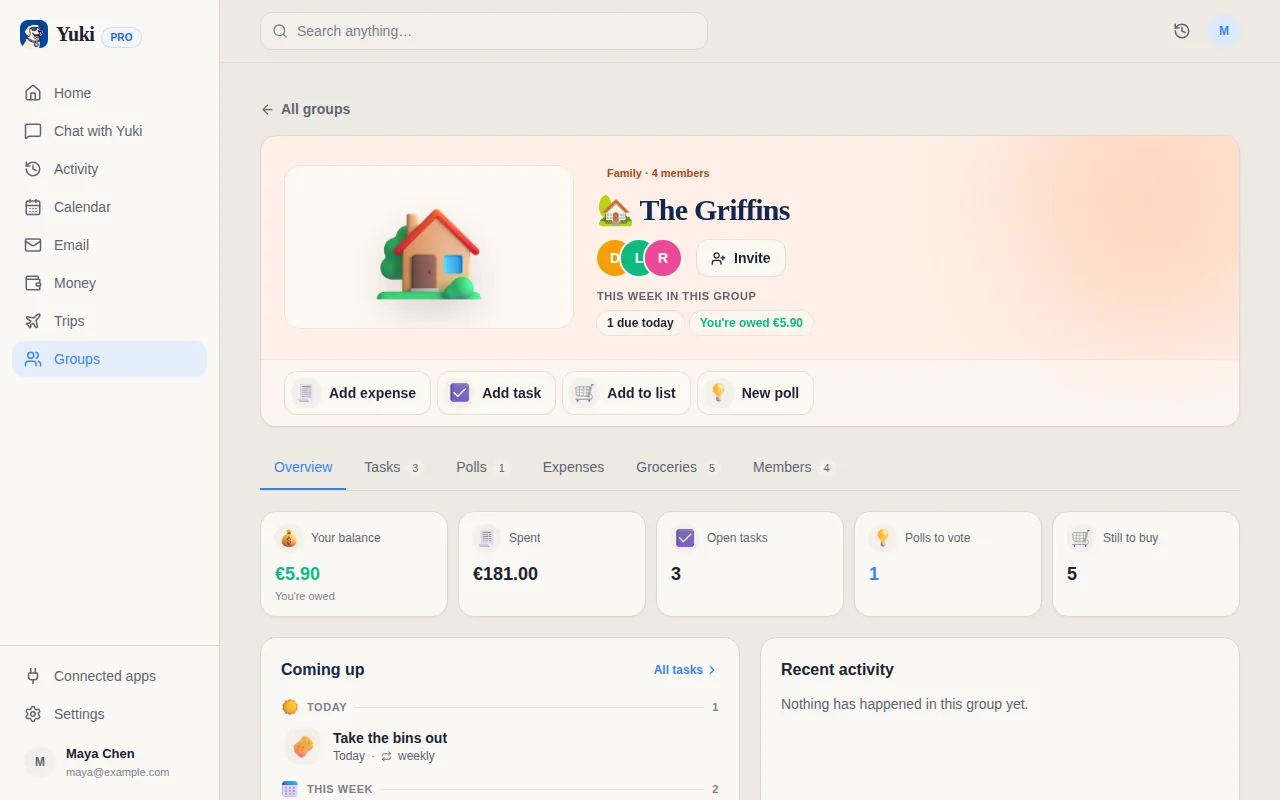
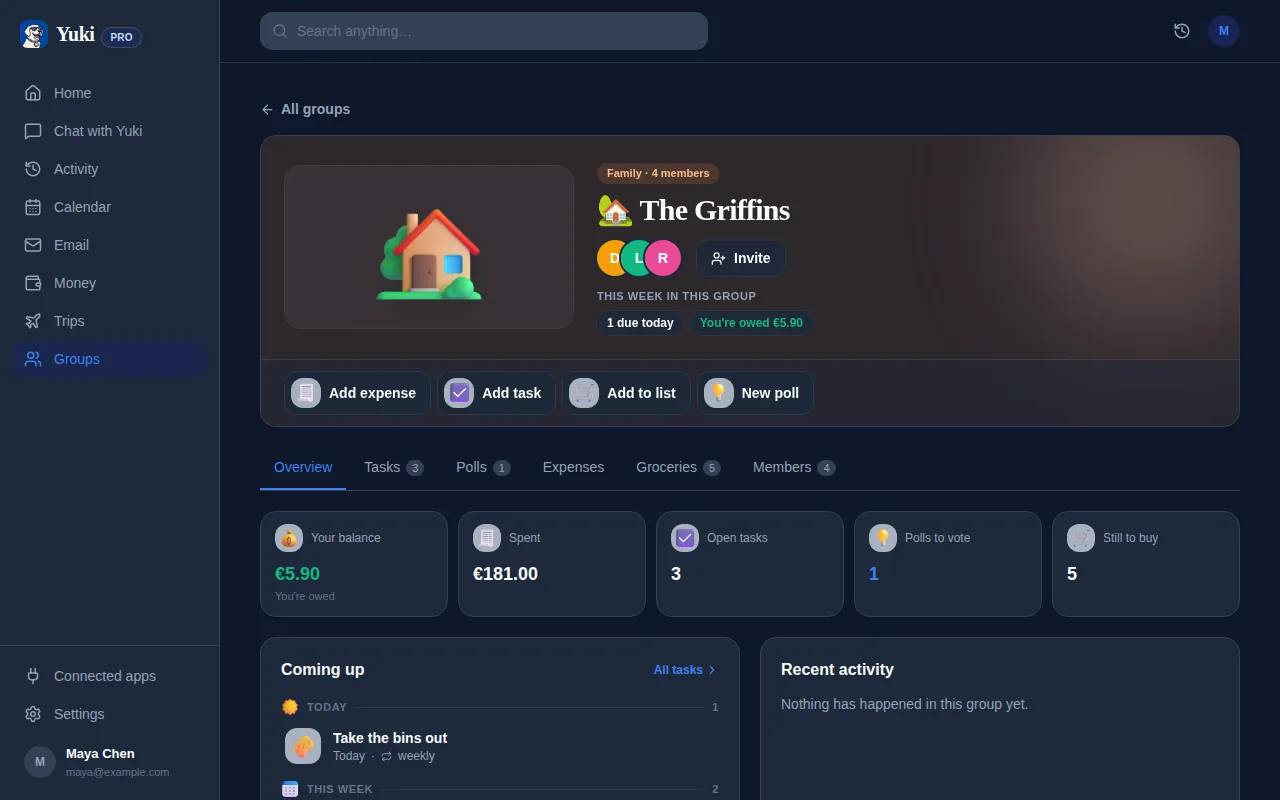
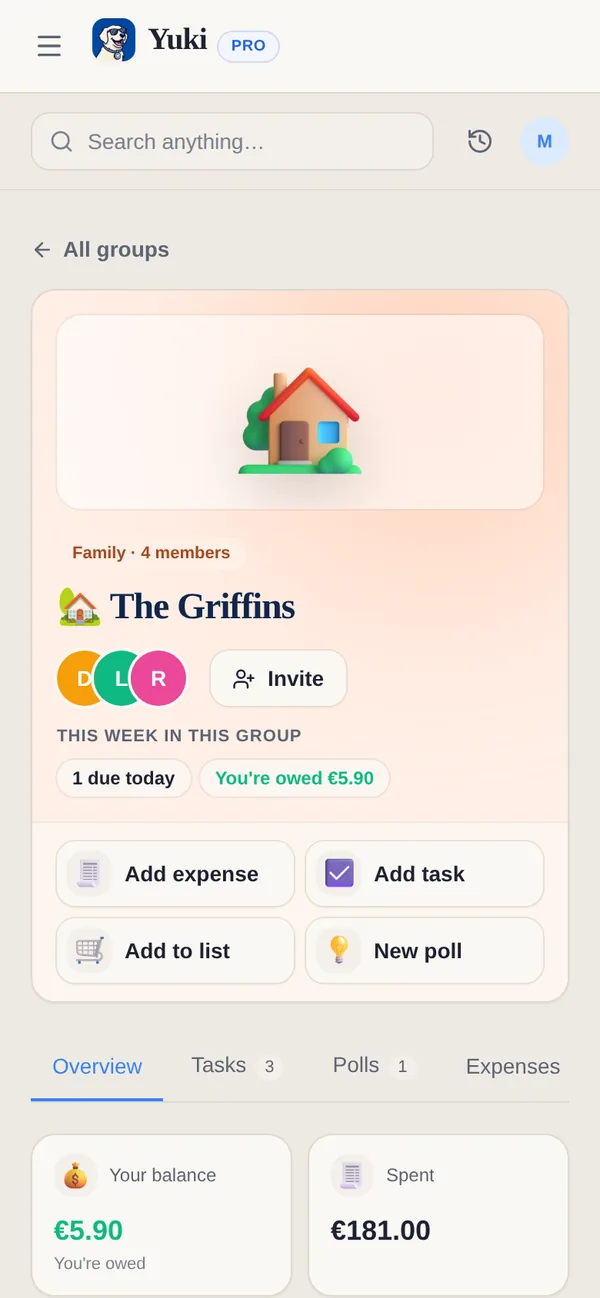
This is where a tool like Yuki removes a lot of the manual upkeep. Yuki connects to your email and automatically turns the confirmations, receipts, bills, and invites already sitting in your inbox into a live calendar, tracked expenses and subscriptions, and reminders — so appointments and due dates appear without anyone typing them in. Its shared groups are built exactly for couples: a shared calendar, shared tasks and grocery lists, and bill-splitting with settle-up, all in one place both partners can see. The point isn't the app for its own sake — it's that a system does the remembering, so neither of you has to be the household's memory.
- Use one shared calendar so appointments aren't trapped in one person's phone or head.
- Keep a shared grocery and errand list anyone can add to in the moment.
- Make bills and who-owes-what visible so money isn't one person's silent burden.
Automate the remembering
The heaviest part of the mental load isn't doing tasks — it's holding them in your mind so they don't slip. If a person has to remember, that person is still working even when nothing's being done. The antidote is to let a system do the remembering: automatic reminders for bills before they're due, alerts for subscription renewals so you're not surprised by a charge, and nudges for birthdays and appointments.
When Yuki reads the renewal notice in your inbox and reminds both of you before the annual subscription re-bills, no one had to be responsible for tracking it. That's the shift — you're replacing 'one partner remembers everything' with 'the system surfaces what matters to both of us.' It reduces the low-grade background stress of feeling like you're the only one holding the whole picture together.
- Set reminders for recurring bills and renewals so nothing depends on memory.
- Let birthdays and appointments trigger automatic nudges to both partners.
- Aim for a system where forgetting is a design flaw, not a personal failure.
Keep it balanced with a short weekly check-in
Even the best division drifts. Someone gets busy, a domain gets heavy for a season, a new responsibility appears. A 10-minute weekly check-in keeps small imbalances from hardening into resentment. Sit down, glance at the shared calendar for the week ahead, flag anything that needs coordinating, and ask honestly whether the load still feels fair.
Treat it as maintenance, not confrontation. The goal isn't a perfect 50/50 ledger every week — some weeks one person carries more, and that's fine when it's visible and mutual. What matters is that both partners can see the whole picture and adjust it together, so managing your shared life stays a shared job rather than quietly sliding back onto one person.
- Review the week ahead together so surprises get caught early.
- Rebalance domains out loud when one has gotten heavy.
- Judge fairness over months, not individual days — visibility matters more than an exact split.
Step by step
- 1Do a brain dump together: each partner lists every recurring household task they currently track, including the invisible ones (remembering birthdays, restocking supplies, scheduling appointments).
- 2Sort tasks into who owns them now — you'll usually find one person 'manages' far more than they physically do.
- 3Reassign whole domains, not just tasks: give one partner full ownership of an area (e.g. groceries, finances) so they carry the noticing AND the doing.
- 4Put every recurring commitment, bill, and appointment into one shared place both partners can see, so nothing lives only in one person's head.
- 5Set up automatic reminders for bills, renewals, and appointments so the system does the remembering instead of a person.
- 6Do a 10-minute weekly check-in to review the shared calendar and rebalance anything that drifted.